Get Found on Google & ChatGPT

July 29, 2024
Tehran von Ghasri: Finding Common Ground Through Comedy
According to Iranian Podcast:
In a world where identity and belonging often seem to divide people, Tehran von Ghasri has carved out a space where laughter becomes a unifying force. A stand-up comedian and writer with Iranian and African-American roots, Tehran draws on his rich cultural background to tackle complex social issues, all while keeping audiences entertained. Born and raised in Washington, D.C., he has emerged as a prominent voice in American comedy, known for blending sharp wit with heartfelt storytelling.
Rooted in Two Worlds
Growing up in the U.S. with a multicultural heritage gave Tehran a unique lens through which to view the world. While his surroundings were distinctly American, his Iranian father made sure that the richness of Persian culture remained present in Tehran’s upbringing. He learned Farsi at home, reading and listening to his father, and although he speaks with an accent, he wears it proudly.
For Tehran, the name his parents gave him, Tehran is more than just a tribute to a city. It’s a statement of identity. “Wherever I am, that place becomes Tehran,” he often says. In other words, being Iranian isn’t about geography, it’s about being true to yourself, your values, and your history.
From Courtrooms to Comedy Clubs
Tehran’s early ambitions looked very different from his current career. He studied political science, economics, and law, envisioning a future in public service or legal advocacy. But as he got deeper into the world of politics and litigation, he realized something was missing joy.
He had always been the one cracking jokes in class, getting into trouble with teachers but making his peers laugh. Eventually, he stopped resisting what came naturally and leaned fully into comedy. His mission: to heal people through humor.
Experiencing Discrimination in a Diverse City
Washington, D.C., is often celebrated for its international community and cultural mix. But Tehran is quick to point out that even in diverse environments, bias can persist. He’s experienced the subtle and overt forms of racism that come with having a mixed heritage in America.
Rather than shy away from these realities, he brings them to the stage, using comedy to reflect on what it means to grow up navigating multiple identities. “Discrimination can happen anywhere,” he says.
Laughter as a Lens for Social Awareness
Tehran believes that comedy isn’t just a form of entertainment, it’s a method for engaging people in tough conversations. He doesn’t shy away from topics like race, privilege, protest movements in Iran, or the identity challenges faced by multicultural individuals.
He says: “A lecture on inequality might lose half the room. But say it with humor, and suddenly the audience is listening, nodding, and learning without even realizing it.”
Respect Over Restrictions
While Tehran doesn’t believe in limiting what comedians can talk about, he does believe in an internal compass: speak your truth, but do so with respect. His comedy is rooted in real-life experiences, which gives it both vulnerability and credibility.
“I don’t put walls between myself and the audience,” he explains. “If I’m honest with them, they’re more likely to connect with what I’m saying, even if it challenges their views.”
Creating Shared Spaces Through Comedy
To foster unity and mutual understanding, Tehran launched live shows like Comedy Bazaar and Tehran Thursdays, which bring together comedians from vastly different backgrounds, religions, cultures, and ethnicities, all sharing a single stage.
These events often feature Muslim, Jewish, Arab, Persian, and American performers standing side by side. For Tehran, this is not just about diversity, it’s about reminding people how much we have in common when we laugh together.
Spreading Peace, One City at a Time
With his project Comedy 4 Peace, Tehran takes this mission on tour. The lineup often includes comedians from communities historically seen as divided. Yet, within minutes of taking the stage, the divisions start to blur.
Each city becomes a stage for healing, a place where stereotypes can be shattered and strangers can feel like neighbors.
Not Just for the Iranian Crowd
While Tehran holds a deep respect for his Iranian heritage, his work speaks to a global audience. He’s performed alongside comedic powerhouses like Dave Chappelle, Tiffany Haddish, and Kevin Hart, learning valuable lessons from each collaboration.
His ability to connect across cultural lines makes him a rare figure in comedy, someone who can speak to both niche and mainstream audiences without losing his voice.
Navigating Social Media With Intention
In an age where digital presence can make or break a performer’s career, Tehran approaches social media with intention. He warns new comedians not to rely on virality alone. “Platforms are tools,” he says. “Use them with purpose, not just for attention.”
Ignoring the Noise
When negative feedback shows up, as it inevitably does online, Tehran doesn’t let it control the narrative. “If you focus on the one hater and ignore 99 supporters, you’re feeding the wrong fire,” he explains. His energy stays focused on growth, gratitude, and the fans who believe in what he does.
The Honest Performer
Between acting and stand-up, Tehran finds that comedy gives him the most room to be himself. While he enjoys taking on roles in film and TV, the live stage is where he feels most authentic. He admires performers like Adam Sandler and Kevin Hart who manage to stay true to themselves across mediums.
Never Settling, Always Improving
Tehran doesn’t believe in picking a “best” performance. For him, it’s always about the next opportunity to evolve. One highlight was performing with Maz Jobrani in Dubai for an audience of 20,000 people, but even after that, he says, “The next show has to be better. That’s the goal.”
Advice for the Bold and the Brave
Asked what he’d tell aspiring comedians, he laughs: “Don’t do it. Be a doctor. Your parents are right!” But behind the joke is a message of discipline. He encourages new comics to work relentlessly on both the craft and the business.
The Legacy He Hopes to Leave
Tehran’s life mission isn’t just about comedy. It’s about bringing people together, building bridges between seemingly different worlds, and helping others take pride in their own heritage.
His Definition of Iranian Identity
“Good words, good thoughts, good deeds. That’s the real Iranians. If you don’t know them, get to know them.”
Related Articles

June 13, 2025
Iranian Real Estate Agent | Atlanta, Georgia | Gloria Hemmati
From Tehran to Top Agent: Gloria Hemmati’s Rise in Atlanta Real Estate According to Iranian Podcast : Gloria Hemmati has become a prominent name in Georgia’s real estate scene, particularly across metro Atlanta. Known for her versatility, she handles everything from home buying and selling to investment properties and short-term rentals. But her journey didn’t begin in the U.S.—it started with a long-held dream back in Iran. With a genuine interest in property from a young age, Gloria always imagined herself working in real estate. However, at the time, the industry in Iran lacked the structure and inclusivity it has in the U.S. After immigrating to America, she found herself in a system that valued education, licensing, and ethical standards; key elements that allowed her to turn her passion into a profession. Once licensed and trained, Gloria quickly earned a reputation for being trustworthy, knowledgeable, and highly responsive. Today, she serves clients from all walks of life: Iranian-Americans, Georgia locals, and even international investors who often rely on her to manage transactions remotely with full confidence. Evolving Market Trends in Atlanta Gloria keeps a close watch on the Atlanta housing market, which she describes as having reached a healthier balance. What was once a hyper-competitive seller’s market has shifted. Buyers now have more opportunities to evaluate options and negotiate favorable terms. While demand still surges in prime neighborhoods, many areas have become more accommodating to those seeking value and flexibility. Smart Investing with Caution Beyond serving clients, Gloria is an investor herself. She owns several income-generating properties, including ones tailored for short-term stays. Her belief is clear: real estate remains one of the most reliable tools for building long-term wealth. However, she warns against buying undeveloped land without a clear plan. Unlike some markets overseas, raw land in the U.S. incurs recurring property taxes and doesn’t generate passive income unless developed. Real Estate with Heart One of the most rewarding parts of Gloria’s job is witnessing the joy that comes with homeownership. She speaks fondly of clients who have started new chapters, marriages, children, new careers, in the homes she’s helped them secure. These moments are what keep her passionate about her work: creating spaces that spark joy and foster personal growth. Comparing Industry Standards: U.S. vs. Iran In Gloria’s eyes, the real estate profession in the U.S. operates with more structure than what she experienced back home. In Iran, anyone can open a real estate office without formal training. By contrast, U.S.-based agents are held to rigorous educational and legal standards. For Gloria, this not only elevates the profession but also builds lasting trust with clients who see her as a true advocate. Buyer and Seller Pitfalls Gloria often sees first-time buyers aim too high, expecting their initial home to meet every desire. She recommends a more realistic approach: aim for 70% of your wish-list and upgrade over time. On the seller side, she’s observed many attempt to go it alone to save commission costs; only to lose time and money in the end. She offers services like home staging for free, knowing how much it can improve a home’s appeal and market performance. The Power of Being Seen and Heard In today’s digital age, Gloria considers social media a vital bridge to potential clients. Her content is genuine and unfiltered, allowing people to understand who she is before meeting in person. She sees platforms like Instagram as more than just marketing—they’re trust-building tools. Serving the High-End and Commercial Sector In addition to residential transactions, Gloria handles luxury and commercial properties. These clients often require a high-touch experience, with attention to detail, discretion, and custom marketing strategies. From out-of-state buyers to overseas investors, many trust Gloria to manage everything remotely, from inspections to closing, without ever setting foot in Georgia. Why Atlanta? Gloria champions Atlanta as one of the most promising cities for living and investing. Compared to markets like Seattle or Los Angeles, it offers much more for the dollar: attractive home prices, job opportunities, and strong economic infrastructure. Atlanta is home to major corporations like Delta Airlines, Home Depot, and CNN. Add to that its natural beauty, mild climate, and vibrant culture, and the city becomes a magnet for newcomers and investors alike. Tools for Success Gloria credits her success to a blend of business instincts and people skills. Her background in sales and insurance helped sharpen her communication style and negotiation strategies. She adapts quickly to her clients’ needs; whether they’re analytical decision-makers or emotionally driven buyers. Balancing Business and Family Real estate doesn’t follow a 9-to-5 schedule. Gloria admits that the work can easily spill into weekends and late nights. Fortunately, her family especially her husband, plays a big role in supporting her goals. That foundation allows her to stay grounded while managing a demanding career. What Makes Her Different? Gloria believes her approach stands out because of two core values: honesty and service. She doesn’t chase deals for commission alone; her aim is to help people make smart, satisfying decisions. Her clients’ happiness, she says, is the true measure of success. Advice for Future Agents To those looking to enter the field, Gloria recommends developing resilience and a love for people. Real estate is not for the introverted or impatient; it’s a long game that requires empathy, networking, and a commitment to lifelong learning. A Mission Bigger Than Real Estate Ultimately, Gloria sees her work as a way to empower others. She hopes to be part of a more unified and successful Iranian diaspora, one that thrives in its adopted home while proudly preserving its rich culture and values.
Read more
October 16, 2024
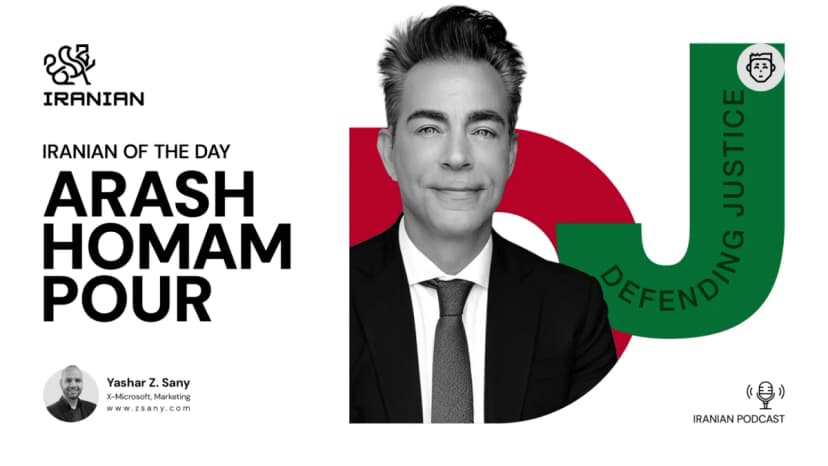
Iranian Trial Lawyer | Los Angeles, California | Arash Homampour
Arash Homampour: A Trial Lawyer Dedicated to Elevating Humanity According to Iranian Podcast : Musical Animated Summary: Arash Homampour, who has secured over $1 billion in verdicts and settlements isn’t the typical figure one imagines in high-stakes litigation. He merges the intensity of a seasoned trial lawyer with the perspective of a reflective thinker and the heart of a humanitarian. Through a wide-ranging and open-hearted interview, he offered insight into the experiences and principles that have shaped his life and career. His legal work, focused primarily on catastrophic injury and wrongful death cases, is driven not just by outcomes, but by purpose: to uplift those often ignored or overwhelmed by systems of power. From Uncertainty to Purpose Unlike many lawyers, Homampour didn’t set out on a clear path toward the courtroom. His early years were marked by a sense of drift, lacking passion or direction. But that changed dramatically when he found himself in a courtroom, an environment where something clicked. It wasn’t ambition that drew him in; it was a deeper calling to advocate for the vulnerable. He felt naturally aligned with the role of standing up for people oppressed by authority or circumstance. Hard Lessons, Lasting Impact The journey wasn’t without obstacles. One of the most formative setbacks came when he failed the bar exam. Far from a defeat, it became a wake-up call that forced him to reassess how he approached preparation and commitment. While he had always been articulate and quick-thinking, this moment taught him that raw ability could never replace rigorous preparation. It instilled a mindset of diligence that now underpins every case he takes. Family, Culture, and the ‘Persian Hustle’ Born to Iranian immigrants who arrived in the United States in the 1960s with limited resources, Homampour grew up steeped in cultural pride and hard-earned values. His upbringing emphasized work ethic, humility, and deep respect for community. He refers to this relentless spirit as the “Persian hustle”; a cultural drive grounded in resilience, ambition, and belief in one’s own potential. This identity continues to shape how he approaches life and law alike. A Mission Larger Than the Law For Homampour, the courtroom is more than just a venue for litigation; it’s a platform for justice. His work centers on individuals who’ve suffered devastating losses due to corporate negligence or misconduct. He views each case as an opportunity to restore dignity and balance in a world that often tips in favor of the powerful. The law, for him, is not just a career but a vehicle to level the playing field for those without resources or representation. Putting Principle Before Profit Despite his success, Homampour openly acknowledges that he’s not particularly focused on the business side of law. He routinely invests heavily in cases he believes in, even if the financial return is uncertain. What matters more to him is impact. He’s built a team that complements his legal strengths and shares his commitment to precision and purpose. Together, they approach each case with intense focus, not just to win, but to make a difference. What Success Really Means Although he’s achieved landmark results, including a $100 million judgment, Homampour doesn’t define success by dollar amounts. Instead, he measures it by the number of lives improved. He envisions using the wealth from major cases to fund opportunities for others—especially bright, underprivileged individuals who might otherwise lack the means to reach their potential. In his view, abundance should be shared, not hoarded. Redefining the Trial Lawyer Archetype Challenging the stereotype of combative trial attorneys, Homampour believes the best legal advocates lead with compassion and humility. He avoids conflict in everyday life, remains calm during high-pressure moments, and focuses on constructive communication. His approach is rooted in emotional intelligence and respect, not ego or aggression. A Passion for Learning and Helping One of the unexpected joys of trial law, he says, is the constant opportunity to learn. Each case opens doors to new subjects like medicine, engineering, neuroscience, and beyond. More importantly, he cherishes being a lifeline to clients during some of the hardest moments of their lives. For Homampour, his career is not a job—it’s a passion-fueled path to create meaning through service. Creative Pursuits Beyond Law Outside the courtroom, music plays a central role in Homampour’s life. During the pandemic, he taught himself music production, focusing on electronic genres like house and techno. Though not yet a commercial endeavor, this creative outlet brings him joy and balance. His personal dream? To perform at Coachella’s Yuma Tent, known for its underground techno sets; a reflection of his artistic curiosity and love for emotional expression. Recognition and Community His dedication has not gone unnoticed. Homampour was recently inducted into the Inner Circle of Advocates, a highly selective organization of the nation’s top trial lawyers. For him, this honor is less about accolades and more about collaboration. He values the opportunity to exchange knowledge with others who are equally committed to legal excellence and ethical advocacy. A Tech-Forward Legal Vision Homampour embraces technology as a tool for justice. He sees artificial intelligence as a valuable resource for simplifying complex legal and medical data, making it easier to present cases clearly to juries. He also believes platforms like Zoom have improved access and efficiency, particularly during depositions, offering a more focused and intimate environment than traditional in-person meetings. Wisdom for the Next Generation To young lawyers, his advice is both practical and philosophical: Don’t rush success. Avoid measuring your worth in wealth or status. Instead, invest in your craft, build a strong team, and maintain your health; both physical and mental. Most of all, lead with integrity in all aspects of life. For Homampour, personal growth and professional excellence are inseparable. A Broader Spiritual Lens While not religious in a conventional sense, Homampour is deeply influenced by spiritual teachings that promote unity and self-awareness. He studies thinkers like Joe Dispenza and Sadhguru, and views yoga as both physical discipline and emotional guidance. This spiritual mindset helps him navigate the highs and lows of law and life with balance and perspective. Lighting the Way Forward Looking ahead, Homampour’s bold goal is to win a billion-dollar verdict; not as a personal milestone, but as a means to fund opportunities for those with untapped potential. He wants to be a catalyst for innovation, artistry, and social change. His measure of success? The number of lives he can help elevate.
Read more
September 30, 2024
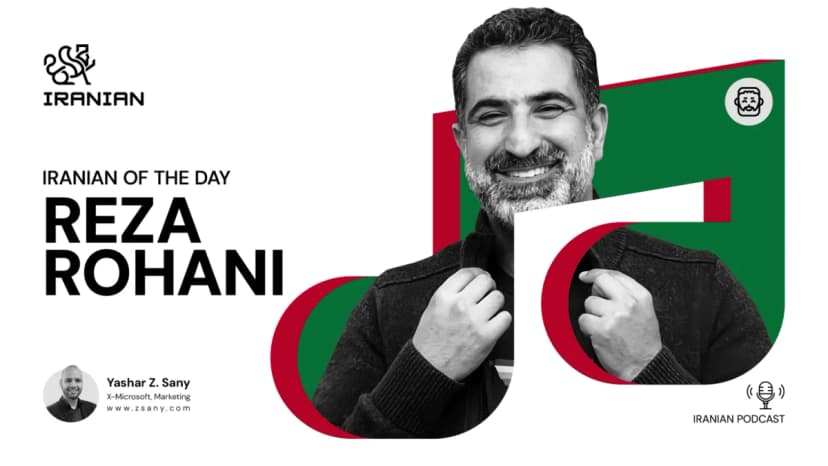
Iranian Composer & Pianist | Los Angeles, California | Reza Rohani
Reza Rohani: Navigating Musical Frontiers Between East and West According to Iranian Podcast : Reza Rohani, an acclaimed pianist and composer, has carved a distinct path in the global music scene by harmonizing Eastern musical traditions with Western techniques. With a career that spans Iran, Germany, and the United States, his journey is one of cross-cultural creativity, emotional resilience, and unwavering dedication to musical expression. Drawing on academic training, real-world collaborations, and personal introspection, Rohani has emerged as a modern voice in Iranian music; one that honors the past while embracing the future. Early Immersion in a Musical Household From the earliest days of his life, music was the language of Rohani’s home. Before he could even speak, he was already sitting at the piano, exploring sound and melody. His musical training began informally but powerfully; his older sister Neda, his uncle Ardeshir, and his father, the legendary musician Anoushiravan Rohani, all played pivotal roles in nurturing his talent. Although his father often traveled for professional engagements, his involvement in Reza’s artistic development was anything but distant. Through guidance, observation, and disciplined mentorship, Anoushiravan laid a strong foundation. Reza would later enhance his abilities through formal instruction from various teachers in both Iran and Germany, each contributing new techniques, styles, and perspectives. Foundations Built in Germany Rohani’s formal academic journey began when he moved to Germany before the age of 15. There, he completed his secondary education while studying classical music intensively. He earned a diploma in classical piano and subsequently pursued a bachelor’s degree in jazz, a genre that broadened his musical vocabulary and deepened his understanding of improvisation and rhythm. His instructors were not merely academic figures; many were working musicians with strong ties to the European media and performance scenes. Their professional experience provided Reza with practical insights into stage performance, live music production, and the artist’s role in contemporary media culture. These influences fueled his passion for performance and prepared him for the multifaceted career that lay ahead. A New Chapter in the United States After spending several years in Iran, Rohani relocated to the United States to pursue graduate studies, specializing in film scoring and classical composition. This academic transition marked a significant shift; adding cinematic narrative, orchestration, and studio production to his creative toolkit. Now residing in the U.S., he produces a wide range of music across styles and formats, from instrumental works to vocal arrangements. His contributions to pop music include collaborations with well-known vocalists, blending popular appeal with classical sophistication. Merging Cultures Through Music At the core of Rohani’s artistic vision is a desire to blur the line between what is traditionally labeled as Eastern or Western. He doesn’t see these musical traditions as mutually exclusive; instead, he views them as complementary elements of a broader sonic spectrum. For Rohani, the melodic richness of Persian music and the structural complexity of Western composition can coexist harmoniously. Through his work, he has created a musical identity that draws inspiration from both worlds but ultimately belongs to neither. His compositions are deeply personal, shaped by his lived experiences and the diverse cultures he has inhabited. Living Abroad: Challenges and Turning Points Spending 13 formative years in Germany was instrumental in Rohani’s growth, both personally and professionally. Despite the emotional challenges of being away from his family, the experience helped solidify his sense of independence and artistic purpose. His return to Iran was marked by increasing professional restrictions, especially concerning performances involving female vocalists. These limitations became a significant obstacle to his creative expression. In 2014, after a particularly disheartening incident in which a sold-out concert was abruptly canceled just one day before the event, Rohani made the difficult decision to leave Iran permanently. The Art of Composition Rohani’s creative process is fluid and varies depending on the context. When composing for film, he often begins with a clear narrative or emotional cue, shaping his music to align with the scene. At other times, he writes spontaneously, letting his fingers find melodies at the piano without any predetermined goal. Some of his most inspired musical ideas have emerged in dreams. When this happens, he immediately records the melody; sometimes waking in the middle of the night to capture it before it fades. These moments, though unpredictable, have contributed to some of his most memorable work. Musical Taste and Signature Pieces Rohani is a firm believer in quality over category. His musical tastes range widely, from classical giants like Brahms to chart-topping pop artists such as Dua Lipa. He is drawn to authenticity and emotional depth, regardless of genre. Among his own compositions, a few stand out as deeply personal achievements. Songs like “Rafiq” and “Sweet As You Are” hold special meaning. He has said that if he were to leave the world tomorrow, he would do so with peace in his heart knowing these pieces exist. Meaningful Collaborations Over the years, Rohani has worked with a diverse array of artists, each collaboration offering new challenges and creative sparks. Among these, his enduring partnership with Sara Naeini holds a special place in his heart. He also recalls working with iconic Iranian performers such as Googoosh, Martik, and Nima Masiha with gratitude and admiration. A Night to Remember: Performing with His Father One of Rohani’s most cherished memories is a concert in Irvine, California, where he performed alongside his father and Sara Naeini. What made the event extraordinary was its spontaneity, there were no rehearsals. His father played entirely from memory while the audience sang along. Rohani describes the experience as pure, joyful, and spiritually fulfilling. Television and Mentorship: Manoto’s Stage Rohani’s role as a judge on the Manoto TV talent show Stage gave him an opportunity to mentor aspiring musicians. He recalls the show as a rare example of professionalism in Persian-language media. With its high production values, structured format, and disciplined team, Stage offered a meaningful platform for emerging talent and helped shape the musical journeys of its contestants. A Legacy of Integrity While Rohani credits many for influencing his artistry, his father’s example remains paramount. What impacted him most wasn’t spoken advice but a lifetime of consistent action. Anoushiravan’s quiet discipline, humility, and work ethic continue to serve as guiding principles in Reza’s own life. Beyond Music: Curiosity and Conviction While music remains his primary focus, Rohani harbors a deep fascination with astrophysics and the mysteries of the universe. Despite this intellectual curiosity, he is clear about his mission: to create music that stands the test of time and speaks to future generations. He also believes that Iran’s most urgent need is greater awareness; scientific, cultural, and social. For him, consciousness and education are the foundations of real societal change. Words for the Next Generation To young artists considering a career in music, Rohani offers candid advice: let passion, not profit, be your guide. The arts may not always promise material wealth, but they offer a different kind of reward. “In this world,” he says, “you’re paid with love, not with money.”
Read more

Iranian Lawyer?
Is your name missing from our list?