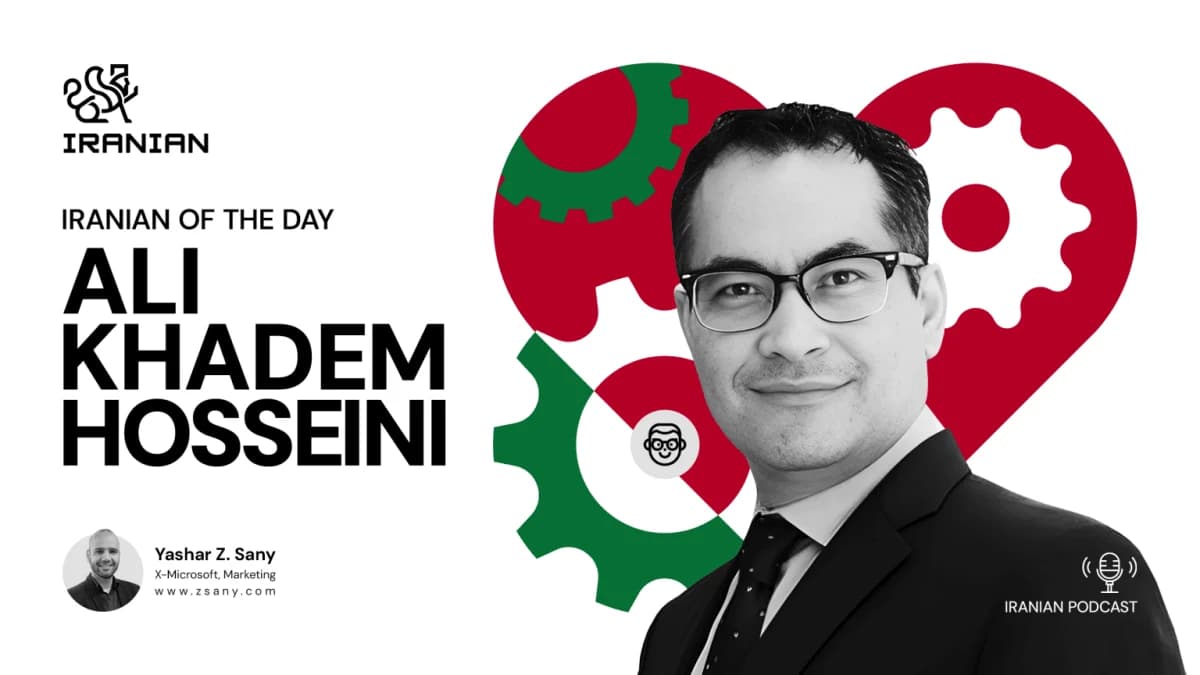
Dr. Ali Khademhosseini has emerged as a globally respected leader in bioengineering and regenerative medicine, blending scientific discovery with entrepreneurial thinking to address real-world challenges. His journey, which spans academia, industry, and innovation, reflects a unique approach to translating research into tangible solutions that benefit human health and society.
Early Beginnings and Educational Foundation
Born in Iran, Dr. Khademhosseini moved to Canada at the age of eleven, a pivotal moment that introduced him to a diverse cultural and academic environment. His academic path began with chemical engineering at the University of Toronto, but as his interest in emerging technologies grew, he gravitated toward bioengineering; a field that better aligned with his passion for solving complex biological problems through innovation.
A Defining Chapter at MIT
The true shift in his scientific career occurred during his PhD studies at the Massachusetts Institute of Technology (MIT), where he trained under the mentorship of Professor Robert Langer. Known for groundbreaking work in tissue engineering, Langer’s mentorship provided more than technical guidance; it instilled a mindset of innovation, resilience, and purpose. Dr. Khademhosseini credits this experience as foundational to his career, shaping both his approach to research and leadership in science.
Academic Excellence Meets Practical Innovation
After earning his doctorate in 2005, Dr. Khademhosseini began his academic career as a professor at both MIT and Harvard, where he led cutting-edge research in biomaterials, tissue engineering, and regenerative medicine. His work focused on developing materials and biological systems that could be used in real medical scenarios, such as wound healing, drug delivery, and tissue repair.
In 2017, he relocated to Los Angeles, initially joining UCLA. Soon after, he established the Terasaki Institute for Biomedical Innovation; an independent research organization aimed at transforming how biomedical science is conducted and applied.
Lessons from the Corporate World
A particularly unique chapter in Dr. Khademhosseini’s career was his time at Amazon, where he spent a year gaining first-hand experience in a corporate setting. This rare move for a research scientist broadened his understanding of how large-scale organizations operate, how efficiency is driven by systems thinking, and how strategic planning contributes to impact.
The lessons learned from Amazon informed the structure and mission of the Terasaki Institute, which now operates more like a nimble, solution-oriented startup than a traditional academic lab.
Rethinking Scientific Purpose: A Focus on Translation
One of the core issues Dr. Khademhosseini often raises is the academic world’s limited emphasis on translational science; the process of turning scientific knowledge into practical applications, products, or services. In his view, many promising innovations get stuck in the publication pipeline, never making it into the hands of clinicians or patients.
To counter this, the Terasaki Institute is structured around the idea that science should begin with a clear end-use in mind. Researchers there are encouraged to pursue ideas that have real potential to solve medical problems and to follow those ideas through product development and commercialization whenever feasible.
Engineering the Future of Food
Among the Institute’s high-profile projects is the development of lab-grown meat from cultured animal cells. Unlike plant-based meat alternatives, cellular meat replicates the texture and taste of conventional meat because it’s grown from actual animal tissue. This innovation not only appeals to consumers but also significantly reduces environmental impact; cutting down on land usage, water consumption, and greenhouse gas emissions. The project has since evolved into a standalone company, illustrating the power of translational research to address global sustainability issues.
Regenerating Human Organs with Bioprinting
A major focus of Dr. Khademhosseini’s current work is regenerating complex human organs like the liver and heart. These organs require intricate networks of blood vessels and must function immediately upon implantation, making them particularly difficult to replicate. By leveraging technologies such as 3D bioprinting and smart biomaterials, his team is designing systems that may one day replace damaged human organs; offering new hope to patients awaiting transplants.
Clinical Innovation: From Bench to Bedside
A compelling example of Dr. Khademhosseini’s impact is a medical material developed to control internal bleeding and prevent the rupture of aneurysms. This innovation successfully underwent preclinical trials, secured FDA approval, and is now being used in hospitals. He notes that such success stories are rare, only around 10% of research projects reach clinical application. This underscores the importance of persistence, adaptability, and long-term thinking in scientific endeavors.
Personalized Medicine: The Future of Healthcare
Dr. Khademhosseini envisions a future where personalized treatments become the norm. With advancements in genomics, patient-derived cells, and organ-on-a-chip models, doctors will soon be able to test treatments in lab environments tailored to individual patients before administering them in real life. This personalized approach promises more accurate therapies, fewer side effects, and a deeper understanding of disease mechanisms.
Data, AI, and the Next Frontier
A key challenge facing modern biomedical research is managing the explosion of biological and genetic data. Dr. Khademhosseini sees artificial intelligence as a vital tool in making sense of this information. AI can accelerate drug discovery, optimize treatment strategies, and help design interventions at the cellular and molecular level. His team is already integrating AI into tissue engineering workflows to identify how cells respond to various conditions and to create smarter, more responsive medical solutions.
Guidance for Future Innovators
For those interested in following a similar path, Dr. Khademhosseini offers clear advice: make sure your interest in science is genuine, because it requires long hours, constant problem-solving, and emotional resilience. He emphasizes the importance of being among the best in your academic cohort, contributing meaningfully to research, and publishing impactful work. Scientific success, he believes, is built on a foundation of passion, discipline, and the courage to fail and try again.
Global Identity and Scientific Unity
Though he remains closely connected to the Iranian community, Dr. Khademhosseini believes in looking beyond national or cultural identities. He encourages scientists to see each other as individuals rather than as representatives of a country or ethnicity, fostering a more inclusive and collaborative global scientific community. He also urges Iranians around the world to support one another, build bridges across communities, and engage constructively with others in the field.
A Legacy of Innovation and Hope
Dr. Khademhosseini’s career is a testament to the idea that science doesn’t have to stay confined to academic journals; it can and should reach people’s lives. Whether by revolutionizing medicine, advancing food sustainability, or inspiring the next generation of researchers, his work aims to improve human well-being in real and measurable ways.
His ultimate goal is not just to innovate but to leave behind a legacy where science is a tool for compassion, progress, and global impact. For students, researchers, and aspiring innovators, his story is a powerful reminder that with purpose and persistence, the laboratory can become a launchpad for meaningful change.